
Your skin is keeping score

What your skin may be saying about your blood sugar, inflammation, and gut health.
When I announced, back in 2000, that I was switching careers to study nutrition, my dad offered three words of wisdom.
"No unsolicited advice."
I've been reminded of it ever since — usually at the exact moment I'm most tempted to ignore it!
Because here's my bind. Watching someone you love drift down a path you know is connected to what I refer to as my B.I.G. 3—Blood Sugar, Inflammation, and Gut Health™ framework — and saying nothing? That's really hard.
Today, I'm focusing on one of the most visible places those three areas show up: your skin.
Blood sugar comes first. Trouble there can build quietly for years, long before routine blood tests catch it. Steady blood sugar, and you've already taken the first step toward calming inflammation. Then there's the gut, which talks to your skin far more than most people realize.
So this post is a little different from the others in this series.
I've written it to be shared.
Not as a lecture. Not as a pointed forward with a raised eyebrow. As something you could quietly pass along to someone you love.
Your skin is one of the most visible signs of all
I started this series with your tongue — a daily snapshot that shifts with what you ate and how you slept. Then your nails — a slow-release diary, recording the last few months.
Your skin is different again.
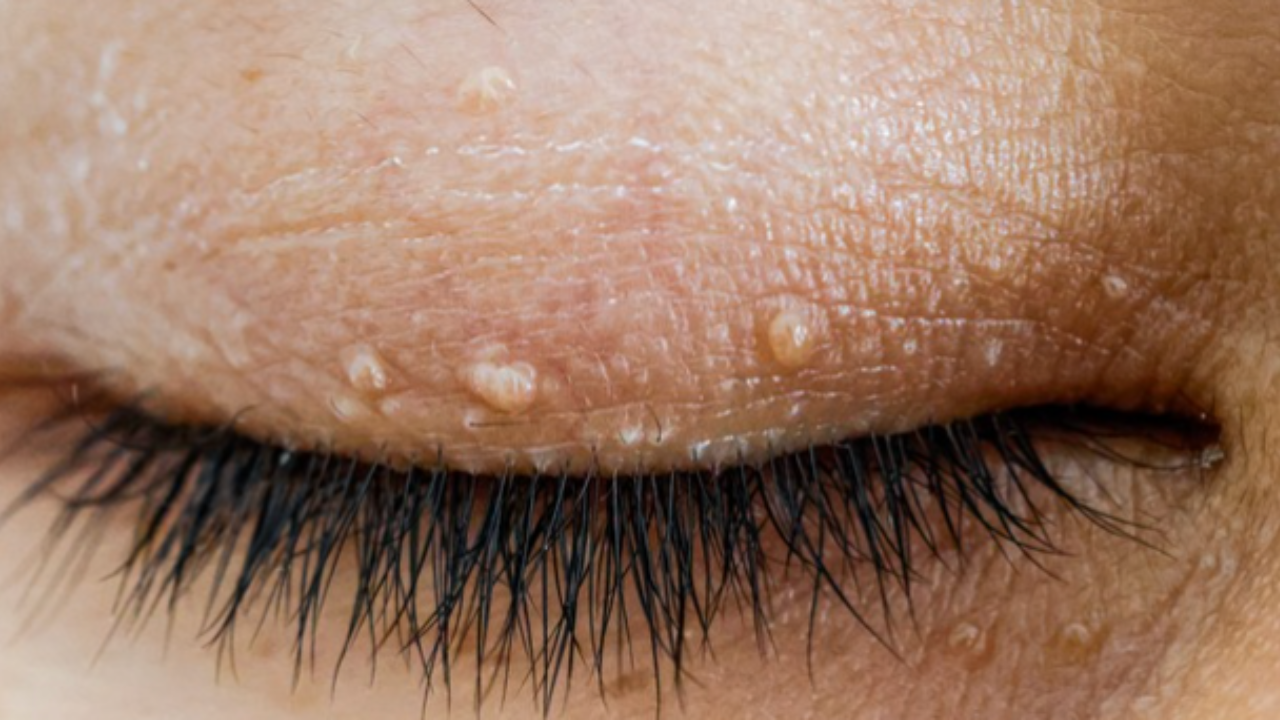
Your skin the largest organ you have, the most visible, and it's remarkably responsive to insulin.
Many of the skin changes linked to insulin resistance take years to build. Which means they can show up well before a blood sugar number ever looks alarming.
They're also the signs we tend to notice first.
Normal blood sugar isn't always an 'all-clear'
Tucked inside your pancreas are clusters of beta cells. Their job is to make insulin — the hormone that escorts glucose out of your bloodstream and into your cells.
When those cells stop listening as well as they used to, the beta cells compensate. They simply make more insulin. Blood sugar can stay in range. Routine labs can appear fine.
But insulin can be running high, sometimes for years.
Eventually, that overtime takes its toll. Long-term research shows the shifts in glucose, insulin sensitivity, and insulin output begin three to six years before a type 2 diabetes diagnosis.[1]
"If your blood sugar looks perfectly normal but your insulin is working overtime. Your skin is often the first to say so."
That's why these skin signs matter.
Many of them are driven by high insulin itself — not high glucose — which makes them an early, visible flag during that long, quiet stretch when the labs haven't caught up yet.
What your skin is actually telling you
As with the tongue and the nails, nothing here is a diagnosis.
These are clues — most useful when they echo something you're already sensing. A sign simply adds fuel to a suspicion.
A quick distinction first. Many of the dry, itchy skin, frequent infections, and slow-healing cuts many people associate with diabetes are usually driven by high glucose and poor circulation. The four below are different. They're more closely tied to insulin, and they can appear much earlier — even in childhood.
Darkened, velvety patches Known as acanthosis nigricans, these thick, darker patches tend to appear where skin folds or rubs — the back and sides of the neck, armpits, groin, sometimes the knuckles. High insulin acts as a growth signal to skin cells, thickening the skin until it looks darker and feels velvety.[2] It's often the first visible sign of insulin resistance, and it can affect children too.
Skin tags Those small, soft flaps of skin often cluster in the same places — neck, armpits, groin — and frequently show up alongside acanthosis nigricans. Skin tags have long been recognized as a possible marker of diabetes and impaired blood sugar control.[3]
That said, they're very common and have other causes too — friction, age, genetics, and pregnancy among them — so a tag on its own is not a red flag. But, a cluster of them is worth noting, and reviewing with your doctor.
Psoriasis Well-defined, pinkish-red patches with silvery scales, often on the elbows, knees, scalp, or midsection. Psoriasis is an inflammatory, immune-driven condition, but people who have it are significantly more likely to be insulin resistant[4] — and to go on to develop type 2 diabetes.[5]
Adult acne Acne isn't just a teenage rite of passage. In one study of young men, those with acne had higher insulin levels and signs of insulin resistance than those without.[6]

Try this
Grab a hand mirror and stand in good natural light. Check the back and sides of your neck, your underarms, and your knuckles. Notice any skin tags.
If you spot a darker, velvety patch, resist the urge to scrub it. It isn't dirt, and no amount of exfoliating will shift it. It's a signal coming from the inside.
Then bring what you notice to the next appointment with your doctor. Ask about fasting insulin and HbA1c — not just fasting glucose, which is often the last number to move.
Why blood sugar comes first in my B.I.G. 3..
My B.I.G. 3 is the framework I use with every client. And the order is deliberate.
Blood sugar comes first because it sits upstream. Blood sugar dysregulation and chronic, low-grade inflammation feed each other in a two-way loop.[7] So when we steady blood sugar, we've already taken the first — and often biggest — step toward calming inflammation.
Then there's the gut. Your gut and your skin are in constant conversation via the gut–skin axis.[8] An imbalanced microbiome can drive inflammation that surfaces on your skin, even when your digestion seems perfectly normal.
And here's the genuinely good news.
Insulin resistance is a process, not a verdict.
Caught early — while the beta cells still have reserve — it responds to how we eat, move, sleep, and manage stress. Acanthosis nigricans often softens and fades as insulin sensitivity improves.[2]
The skin that raised the flag can also show you when things are turning around.
 My own gut–skin experience
Back in early May ’17, I was about 8 months into my master's program. One Medical was beginning to prepare for its IPO — and decided to eliminate our entire team of integrative practitioners!
I'd never been let go from a job before. I needed to get my business off the ground fast, so I'd be ready for referrals from the doctors I'd been working alongside. I had 4 weeks to build my own practice. Stress was at an all time high.
I got a rash around my right eye. My dermatologist diagnosed it as peri-orbital dermatitis, and sent me home with a cream.
It didn't work. Then there was another cream - it didn't work either.
I knew stress was a trigger. But I also wanted a quick fix. (Yes — we're all human.)
Even though my digestion was working like clockwork, as usual, I wanted to see whether anything in my gut could be triggering my rash. So I ran a GI test.
It turned up a couple of unwanted bugs.
So I did the work: an elimination diet, supplements to help nurture my microbiome and re-establishing the stress-management practices that had slipped. Within a couple of weeks, the rash was gone, and it never came back.
Yes, it took a little longer than a quick cream. But it worked.
If you — or someone you love — are struggling with a stubborn skin issue that keeps coming back, I highly recommend working through the B.I.G. 3 framework. Steady blood sugar, calm inflammation, and look closely at the gut. That's how you get to the root of it, and resolve it for good.
Your skin has been talking all along
The tongue speaks to today.
The nails, to the last few months.
The skin often tells a longer story — one that has been quietly building for years.
That isn't cause for alarm. It's an invitation. The earlier we listen, the more choices we have.
So take a look today. And if someone came to mind while you were reading, maybe this is the one you pass along.
Drop a comment below — I'd love to hear what you notice. And if you missed the earlier posts in this series, start with your tongue and your nails. Together with your skin, they tell a surprisingly coherent story.
TL;DR
- Skin is insulin-sensitive: Several common skin changes are driven by high insulin, and can appear years before blood sugar looks abnormal.
- Four signs worth knowing: Darkened velvety patches (acanthosis nigricans), skin tags, psoriasis, and adult acne are each linked to insulin resistance.
- Clues, not conclusions: These are most useful alongside other signs. Ask about fasting insulin and HbA1c, not just fasting glucose.
- The B.I.G. 3 order matters: Steadying blood sugar is step one toward calming inflammation — and the gut–skin connection can drive stubborn skin issues even when digestion seems fine.
- Prevention is the gift: Caught early, while beta cells still have reserve, insulin resistance responds to lifestyle — and the skin often shows the change.
References
All references verified against PubMed and publisher records, October 2026.
[1] Tabák, A.G., et al. (2009). Trajectories of glycaemia, insulin sensitivity, and insulin secretion before diagnosis of type 2 diabetes: an analysis from the Whitehall II study. The Lancet, 373(9682), 2215–2221. PMID: 19515410.
[2] Hermanns-Lê, T., Scheen, A., & Piérard, G.E. (2004). Acanthosis nigricans associated with insulin resistance: pathophysiology and management. American Journal of Clinical Dermatology, 5(3), 199–203. PMID: 15186199.
[3] Kahana, M., et al. (1987). Skin tags: a cutaneous marker for diabetes mellitus. Acta Dermato-Venereologica, 67(2), 175–177. PMID: 2438887.
[4] Gyldenløve, M., et al. (2015). Patients with psoriasis are insulin resistant. Journal of the American Academy of Dermatology, 72(4), 599–605. PMID: 25653028.
[5] Armstrong, A.W., Harskamp, C.T., & Armstrong, E.J. (2013). Psoriasis and the risk of diabetes mellitus: a systematic review and meta-analysis. JAMA Dermatology, 149(1), 84–91. PMID: 23407990.
[6] Del Prete, M., et al. (2012). Insulin resistance and acne: a new risk factor for men? Endocrine, 42(3), 555–560. PMID: 22447309.
[7] Hotamisligil, G.S. (2006). Inflammation and metabolic disorders. Nature, 444(7121), 860–867. doi: 10.1038/nature05485.
[8] Salem, I., et al. (2018). The gut microbiome as a major regulator of the gut-skin axis. Frontiers in Microbiology, 9, 1459. PMID: 30042740.
