
Beyond Food & Mood: Metabolism
Why working on your metabolic health typically comes with a very welcome side effect.
One in five.
That's roughly how many American adults took prescription medication for their mental health in 2024.[1] In 2019, it was closer to one in six.[2]
That's not a judgement. Medication can be life-changing, and for many people it's essential. I'm sharing it because of what I've seen in my practice since I started, way back in 2004 (yes, it's been a while!). And in the past month, two clients made me realize that a side benefit I've come to take for granted wasn't something they'd expected at all.

"I just feel happier"
Last week, as one of my clients was completing her work in my 90-Day Proactive Heart Health program, she mentioned, almost in passing, "I just feel happier."
A few weeks earlier, another happened to say: "I'm less reactive across the board, which is having an really positive effect on every aspect of my life."
My immediate response in both cases, was well, yes, of course.
But neither of them had seen it coming.
They'd come to me to improve their metabolic health. Feeling happier/less reactive wasn't even on their radar!
When you've been doing this work as long as I have, some results become so familiar you forget how remarkable they are.
From my perspective, a brighter mood is a predictable part of the process. But, to my clients, it still typically comes as a complete surprise.
That's why I'm writing this post.

The body works as one integrated system
We're all familiar with the idea of food and mood. As Thanksgiving approaches, there's always noise about turkey and tryptophan, the building block your body uses to make serotonin.
But what I'm describing goes way beyond any single food. It's about how you eat overall, and how that shapes your microbiome, which in turn influences your mood.
We know the brain shares the same bloodstream, the same inflammatory signals, and the same nutrients as every other organ. And yet, for years, we've treated the body almost as a set of separate elements: the heart for cardiology, the gut for gastroenterology, the brain for psychiatry.
But we're not a puzzle of separate pieces. These connections are direct, biological, and measurable.
"Your brain doesn't just sit at the top of your body. It's literally fed by it."
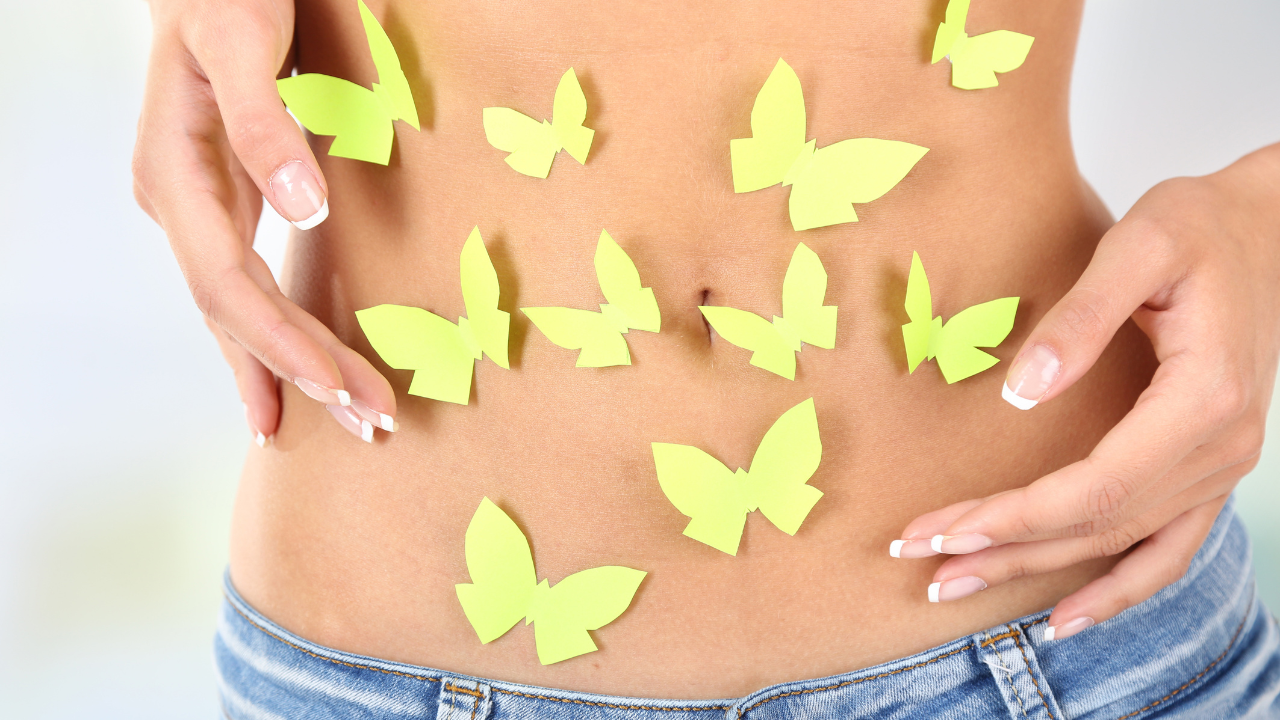
Butterflies are just the beginning...
We're familiar with the gut-brain connection. We've all had butterflies before a big event, and we know to trust a gut feeling. Some of us even know that our guts are our "second brain." But most of us stop there.
The gut and brain talk constantly, in both directions, through the vagus nerve, the immune system, hormones, and compounds made by your gut bacteria.[3]
You may have heard that 90% of your serotonin is made in the gut, so your gut must be dosing your brain with a feel-good chemical. Not quite. Your gut bacteria do influence how much serotonin your gut makes,[4] but most of it stays local, keeping your gut moving and supporting blood clotting. Making a brain chemical in the gut isn't quite the same as delivering it to the brain.
So how does what's made in the gut actually reach the brain?
A 2026 study published in Microbiome offers one of the clearest answers yet.
Mice with reduced blood flow to the brain were fed inulin, a prebiotic fiber, and grew more of the gut bacteria that make short-chain fatty acids. Those compounds helped restore GABA, the brain's main calming signal. They also improved thinking and memory and eased anxiety-like behavior.[5] Without those bacteria, the fiber had no effect.
FYI: Inulin is a type of fiber your body can't digest, but your gut bacteria can. It's found naturally in onions, garlic, leeks, asparagus, and chicory root. When you eat these foods, your bacteria ferment the fiber into short-chain fatty acids, the same compounds that helped restore the brain's calming signal in this study.
Another 2026 study, published in Nature, found that certain gut bacteria, including a Bifidobacterium strain and a probiotic Pediococcus strain, convert choline, a nutrient found in foods like eggs, into the neurotransmitter acetylcholine. The bacteria then put it to work right there in the gut, strengthening its immune defenses and keeping things moving.[6] When researchers removed the single gene the bacteria needed to make it, the acetylcholine disappeared. In other words, the bacteria weren't just helping the body make acetylcholine. They were making it themselves.
FYI: Acetylcholine was the first neurotransmitter ever discovered, and your brain relies on it for memory, focus, and movement.
Two studies, one lesson: what you feed your gut bacteria shapes the chemistry they produce. Some of it works locally in your gut, and some of it reaches your brain.
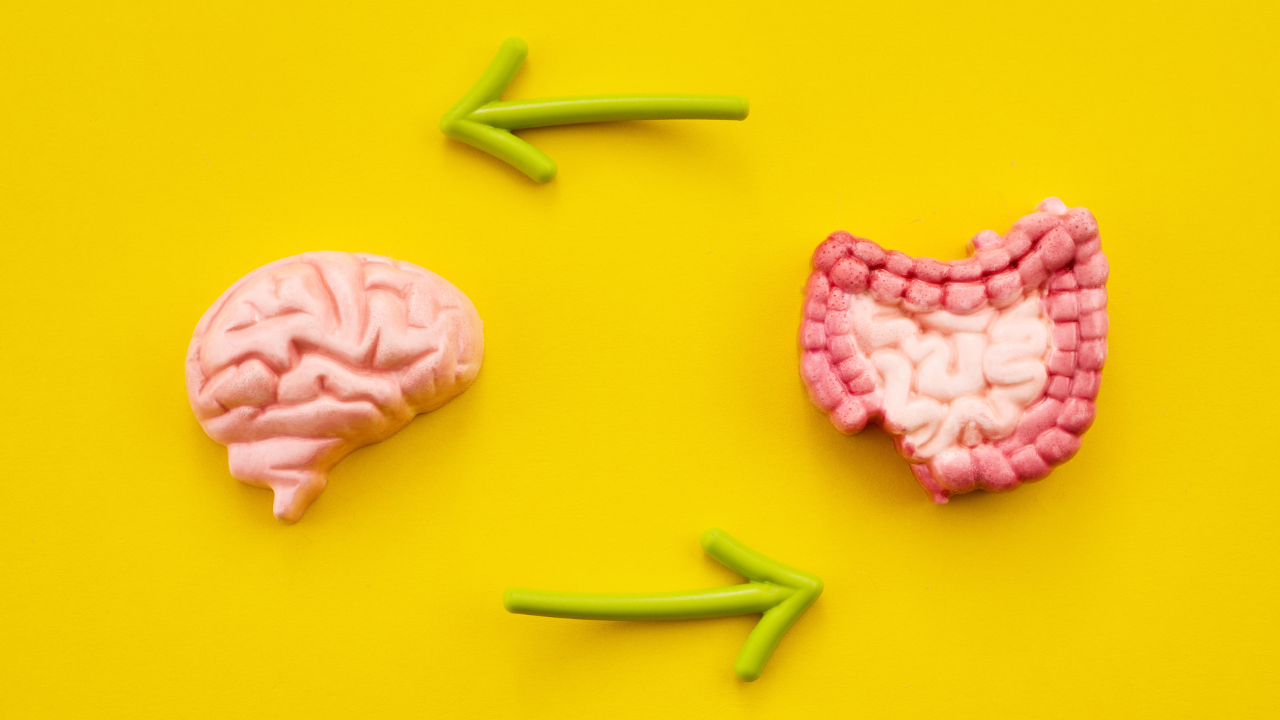
Rethinking the chemical imbalance story
For eons, depression was explained as a chemical imbalance, usually too little serotonin. In 2022, however, a major review found no consistent evidence that low serotonin causes depression.[7] The review has its critics, but the simple version of the story hasn't held up.
Neurotransmitters obviously still matter.
But instead of asking which brain chemical is low, I'd argue that the starting point should be what is actually influencing how much your body is making, and how well your brain is able to use them.
In my experience, root causes always come back to three essential factors: blood sugar, inflammation, and gut health. That's precisely why my entire practice centers on what I refer to as the B.I.G.3 — Blood Sugar, Inflammation, Gut Health™ which is also why feeling happier/less reactive are just two examples of the very welcome side benefits of a functional medicine approach.

A systems biology approach to mood
Although I don't specialize in treating mental health conditions, my functional medicine (aka systems biology) approach involves reviewing how all of our body's systems influence one another.
Root-cause biology. Gut health, immune function, genetics, and chronic inflammation all affect how your body makes neurotransmitters. Inflammation in particular can push the brain toward a more defensive, on-alert state.[8]
Nutritional psychiatry. Food is medicine. In the landmark SMILES trial, about a third of adults with depression who improved their diet reached remission within twelve weeks, compared with 8% of those who received social support alone.[9]
In the Women's Health Initiative, which followed nearly 70,000 women, diets heavy in added sugars and refined grains were linked to a higher risk of depression. Diets rich in fiber, whole grains, vegetables, and whole fruit were linked to a lower risk.[10]
Essential nutrients. Key players include omega-3s (particularly EPA-dominant formulas),[11] magnesium,[12] and vitamin D.[13] To support natural production of dopamine, serotonin, and GABA, I often add active B-complexes,[14] acetyl-L-carnitine,[15] and high-quality fish oils. Which of these you need depends on your labs and your history.
Addressing mental health? Gut health is paramount
If you, or someone you love, is struggling with a mental health issue, work with someone who's equipped to help you optimize your gut function. Given all we now know about the gut-brain connection, that should be a priority, not an afterthought.
Then, ask your doctor to check these five labs:
1. Fasting insulin
This is the one I'd put first, and it's the one most often left off standard panels.
When your cells stop responding well to insulin, your pancreas compensates by making more. That can keep your blood sugar normal for years, until it can't. Fasting insulin shows you the strain much earlier. I like to see it below 6 µIU/mL, and at least below 9.
Why does it matter for mood?
Nearly 98 million American adults have prediabetes,[16] and more than eight in ten don't know it.[17] Depression is nearly twice as common in people with type 2 diabetes.[18] And in a nine-year Dutch study, people with insulin resistance had roughly double the risk of developing major depression.[19]
The brain's emotional centers are rich in insulin receptors. When brain cells stop responding to insulin, it may dull the reward system, slow the growth of new brain cells, and keep the stress-hormone system running in overdrive.[20]
Now we're obviously a little different from mice, but this mouse study ties it all together. An obesity-inducing diet led to anxious, depressed behavior, along with poorer insulin signaling and more inflammation in the brain. Changing the animals' gut bacteria reversed much of it.[21] That's the B.I.G.3 in a single experiment.
Tip: your standard lipid panel already offers a clue. A high triglyceride-to-HDL ratio is a marker of insulin resistance.
2. Fasting glucose and HbA1c
These are worth evaluating too, but they tell the late chapters of the story; ideally they're read in conjunction with your fasting insulin.
3. Vitamin D
Ask for 25-hydroxyvitamin D. In a meta-analysis of 25 trials, supplementation eased negative emotions, and the benefit was clearest in people whose levels started low.[13]
4. Thyroid Stimulating Hormone (TSH)
Your thyroid sets the pace for metabolism, including your brain. Even subclinical hypothyroidism has been linked to a higher risk of depression.[22] Standard ranges are wide. I like to see TSH between 1.0 and 2.5.
5. Liver enzymes (ALT, AST, and GGT)
Fatty liver disease, now called MASLD, usually causes no early symptoms. About one in four adults with it also has depression.[23] Elevated enzymes can signal liver stress, though fatty liver can exist even when they look normal. Ask your doctor to calculate your FIB-4 score too. It's the recommended first step for assessing liver scarring.[24]
Ask your doctor to include these at your next blood draw, or order them yourself through Labcorp OnDemand or Quest (questhealth.com).
And, if you want to see the blood sugar and mood connection for yourself, try wearing a continuous glucose monitor (CGM) for a couple of weeks. Note how you feel alongside your readings, and patterns often emerge.
One approach, several wins at once
If you've recently been told your cholesterol, blood pressure, HbA1c, or inflammation markers are elevated, and you're also dealing with mental health challenges, know this: working with me could address all of them at the same time, rather than simply adding another medication to your growing stack.
If you're currently taking medication for your mental health, DO NOT stop or change it on your own. The goal is to work alongside your prescriber, not around them.
Your body is one connected system, and we need to treat it as such.
TL;DR
Mood is metabolic: When clients improve their blood sugar, inflammation, and gut health, feeling happier and less reactive is typically part of the result.
The body is one system: The gut-brain axis runs both ways. New 2026 research shows fiber-fed gut bacteria can help restore the brain's calming GABA signal.
Chemical imbalance is only part of the story: Root causes come back to blood sugar, inflammation, and gut health, plus key nutrients.
Gut health is paramount: If you're addressing a mental health issue, make sure you're working with someone equipped to help you optimize your gut function.
Insulin resistance deserves attention: It's linked to roughly double the risk of depression, and fasting insulin catches it years before glucose does.
Test, don't guess: Ask for fasting insulin, fasting glucose and HbA1c, vitamin D, TSH, and liver enzymes.
References:
[1] Briones, E.M. & Villarroel, M.A. (2026). Mental health treatment among adults: United States, 2024. NCHS Data Brief, No. 564.
[2] Terlizzi, E.P. & Zablotsky, B. (2020). Mental health treatment among adults: United States, 2019. NCHS Data Brief, No. 380.
[3] Cryan, J.F., et al. (2019). The microbiota-gut-brain axis. Physiological Reviews, 99(4), 1877–2013.
[4] Yano, J.M., et al. (2015). Indigenous bacteria from the gut microbiota regulate host serotonin biosynthesis. Cell, 161(2), 264–276.
[5] Zou, Z., Xi, J., Li, J., et al. (2026). Inulin alleviates vascular cognitive impairment by restoring prefrontal GABAergic function via microbiota-SCFA-GPR41/43 axis. Microbiome. doi:10.1186/s40168-026-02469-8
[6] Song, D., Duncan-Lowey, B., Khetrapal, V., et al. (2026). Commensal-derived acetylcholine enhances mucosal immune education. Nature, 655, 1027–1036.
[7] Moncrieff, J., et al. (2023). The serotonin theory of depression: a systematic umbrella review of the evidence. Molecular Psychiatry, 28(8), 3243–3256.
[8] Miller, A.H. & Raison, C.L. (2016). The role of inflammation in depression: from evolutionary imperative to modern treatment target. Nature Reviews Immunology, 16(1), 22–34.
[9] Jacka, F.N., et al. (2017). A randomised controlled trial of dietary improvement for adults with major depression (the "SMILES" trial). BMC Medicine, 15(1), 23.
[10] Gangwisch, J.E., et al. (2015). High glycemic index diet as a risk factor for depression: analyses from the Women's Health Initiative. American Journal of Clinical Nutrition, 102(2), 454–463.
[11] Liao, Y., et al. (2019). Efficacy of omega-3 PUFAs in depression: a meta-analysis. Translational Psychiatry, 9(1), 190.
[12] Tarleton, E.K., et al. (2017). Role of magnesium supplementation in the treatment of depression: a randomized clinical trial. PLoS ONE, 12(6), e0180067.
[13] Cheng, Y.C., Huang, Y.C. & Huang, W.L. (2020). The effect of vitamin D supplement on negative emotions: a systematic review and meta-analysis. Depression and Anxiety. doi:10.1002/da.23025
[14] Young, L.M., et al. (2019). A systematic review and meta-analysis of B vitamin supplementation on depressive symptoms, anxiety, and stress: effects on healthy and "at-risk" individuals. Nutrients, 11(9), 2232.
[15] Veronese, N., et al. (2018). Acetyl-L-carnitine supplementation and the treatment of depressive symptoms: a systematic review and meta-analysis. Psychosomatic Medicine, 80(2), 154–159.
[16] Centers for Disease Control and Prevention. National Diabetes Statistics Report. Accessed October 2026.
[17] Centers for Disease Control and Prevention. Prediabetes: Could It Be You? Accessed October 2026.
[18] Roy, T. & Lloyd, C.E. (2012). Epidemiology of depression and diabetes: a systematic review. Journal of Affective Disorders, 142(Suppl), S8–S21.
[19] Watson, K.T., et al. (2021). Incident major depressive disorder predicted by three measures of insulin resistance: a Dutch cohort study. American Journal of Psychiatry, 178(10), 914–920.
[20] Lyra e Silva, N.M., et al. (2019). Insulin resistance as a shared pathogenic mechanism between depression and type 2 diabetes. Frontiers in Psychiatry, 10, 57.
[21] Soto, M., et al. (2018). Gut microbiota modulate neurobehavior through changes in brain insulin sensitivity and metabolism. Molecular Psychiatry, 23(12), 2287–2301.
[22] Tang, R., et al. (2019). Subclinical hypothyroidism and depression: a systematic review and meta-analysis. Frontiers in Endocrinology, 10, 340.
[23] Shea, S., et al. (2024). Non-alcoholic fatty liver disease and coexisting depression, anxiety and/or stress in adults: a systematic review and meta-analysis. Frontiers in Endocrinology, 15, 1357664.
[24] Rinella, M.E., et al. (2023). AASLD Practice Guidance on the clinical assessment and management of nonalcoholic fatty liver disease. Hepatology, 77(5), 1797–1835.
