
Your nails track everything
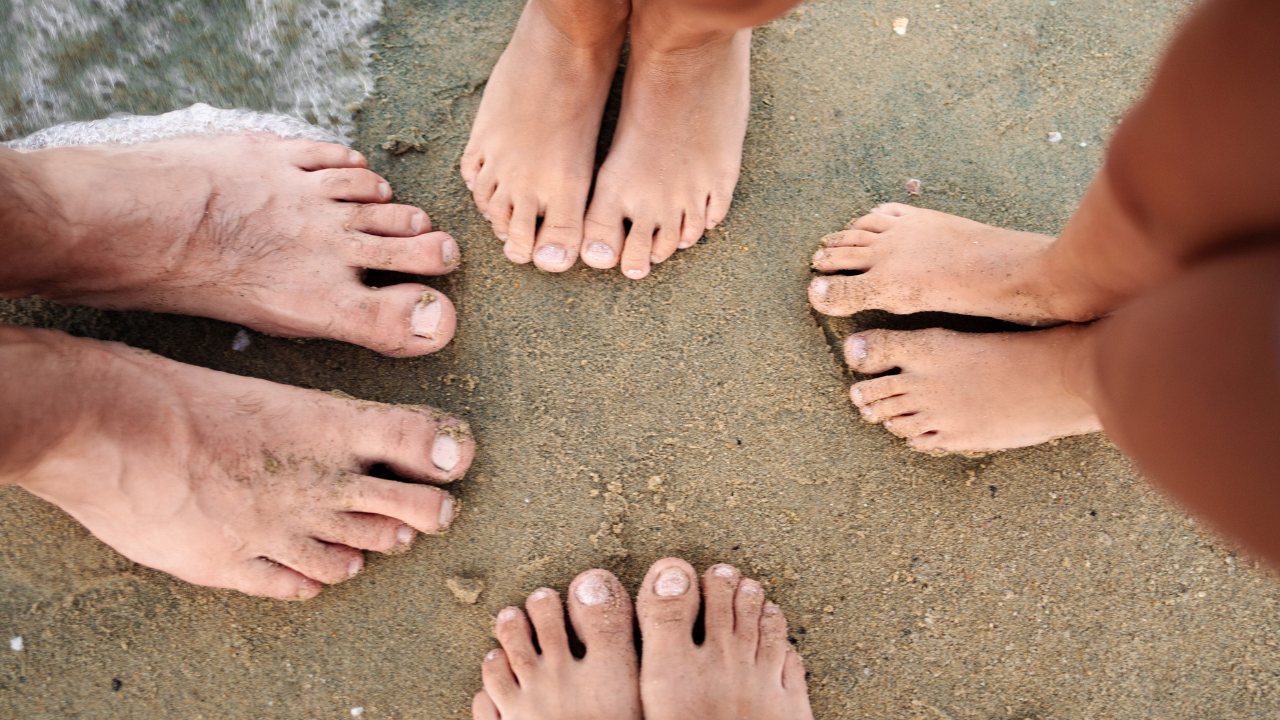
A toxic exposure. A stressful time. A surgery, an illness, a major life event — even one you've long since moved past. Your body is quietly filing it all away. In your nails!
Your nails are built, layer by layer, from whatever is circulating in your bloodstream at the time — which means they function as a running, physical record of your internal health, whether you've ever thought of them that way or not.
Although growth tends to be slightly quicker during the summer months, fingernails typically take between three to six months to fully grow out from base to tip. Toenails take a little longer — twelve to eighteen months. So when you look down at your nails, you're not looking at today. You're looking at a slow-developing record of the last few months of your life.
You probably glance at your nails dozens of times a day without really seeing them...
You tap them on a desk while you think. You may paint them, file them, or you might even bite them when nobody's looking!? But I'd wager that you've never looked at them the way a functional medicine practitioner does — as a running archive of your internal health, written in keratin, growing out from the base one slow millimeter at a time.
Because that's exactly what they are.
Symptoms are signs
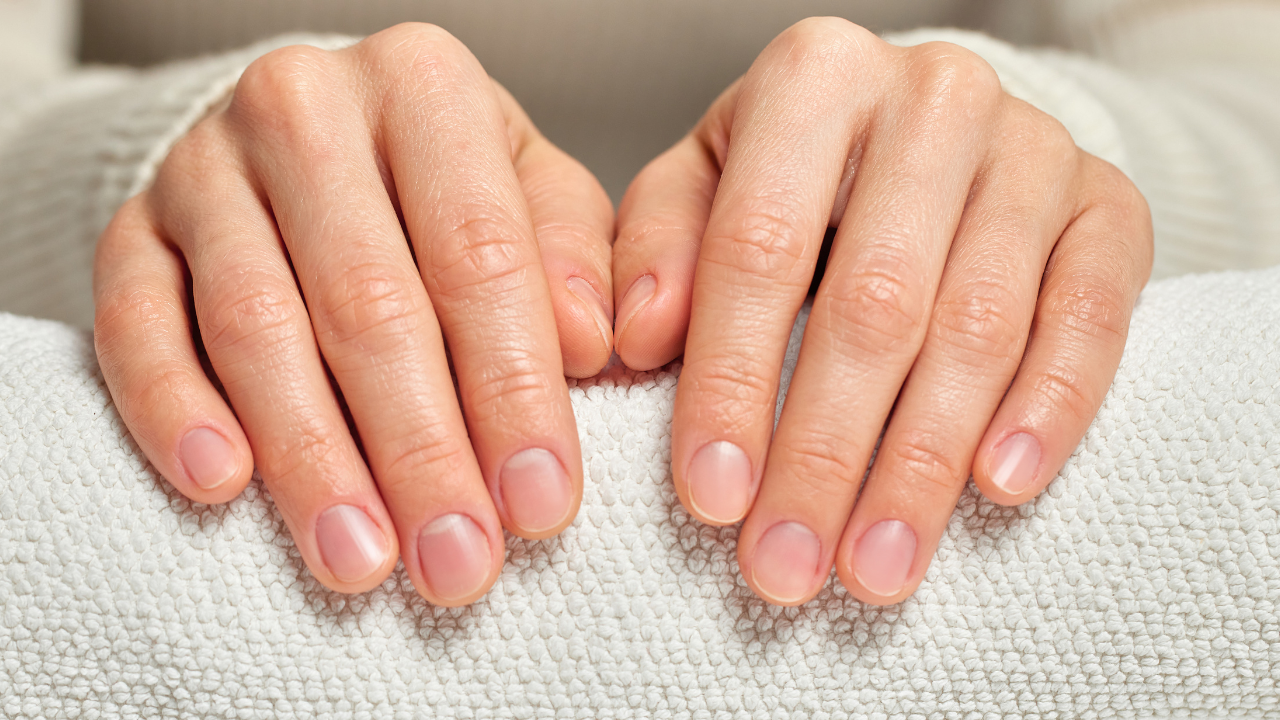
Brittle nails, white spots, ridges running top to bottom or side to side, nails that curve downward or lift at the edges — these are the kinds of things we tend to chalk up to "just how my nails are," or blame on too much hand washing, or cover up with a coat of polish.
But in functional medicine, a physical sign is always worth paying attention to. Your nails grow slowly — which means when something shows up, it's usually been building for a while...they can tell us what's been quietly unfolding over weeks and months.[1]
"Your nails are a slow-release diary. What they're recording now reflects what's been happening inside you for longer than you might think."'
A genuinely fascinating piece of biology
Your nails grow from the matrix — the tissue tucked just under the base of your nail, beneath that little half-moon shape called the lunula. Everything that nail will become is determined there, in that small, protected zone of rapid cell division.
Here's a nuance worth knowing: technically, the hard nail plate you see, polish, and file isn't actually living tissue. By the time those cells reach the surface, they've hardened into compacted keratin and are, biologically speaking, already dead — the same basic material as your hair. But the matrix that produces them is living tissue, with its own blood supply and its own sensitivity to what's happening in your body.[2]
Which means that the nutrients circulating in your blood right now — the iron, the zinc, the biotin, the protein — are the raw materials that living matrix is using to build the next few millimeters of nail. Shortchange the supply chain, and the quality of what gets built will reflect it. Not immediately. But in four to six months, as that section grows out, the evidence is visible at your finger, and toe tips.[2]
This slow reveal is what makes nails a useful clinical tool — and such an under-appreciated one.
 What your nails are actually telling you
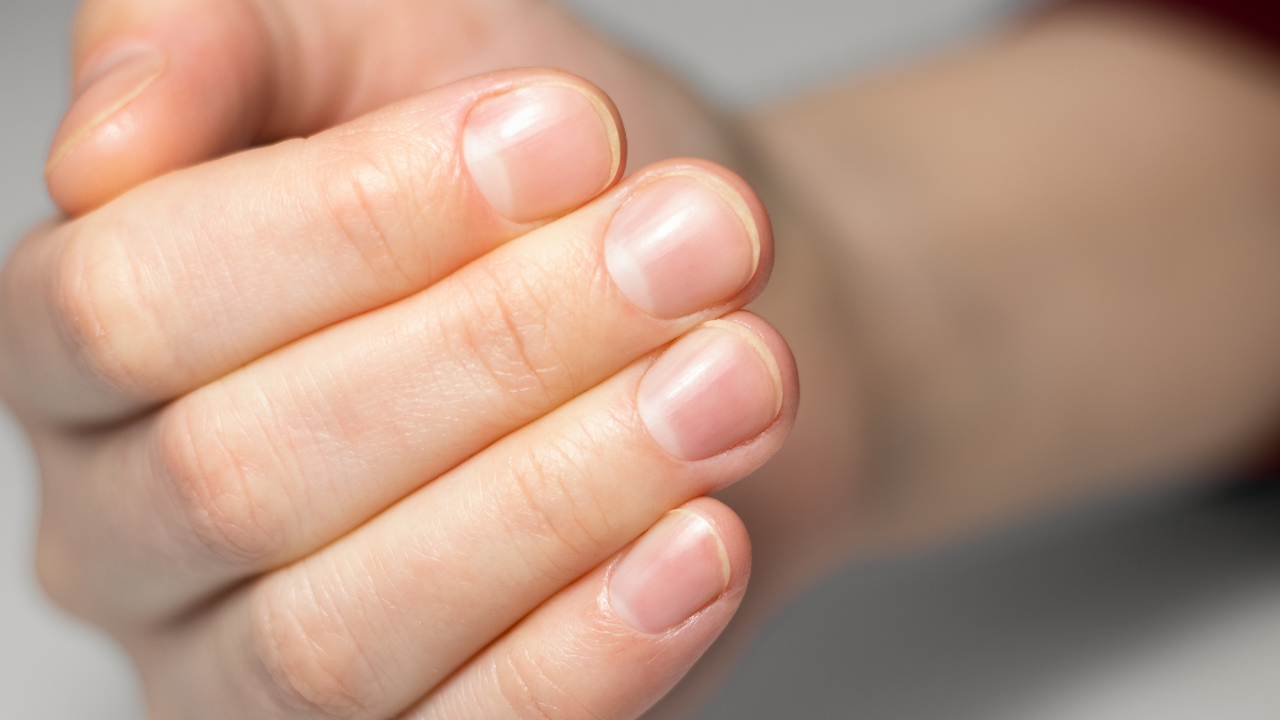
As with your tongue, I want to be clear: nothing here is a diagnosis; do not waste your time spiraling down medical rabbit holes. Your nails are clues — most useful when they echo something you're already sensing or experiencing. One signal adds fuel to a suspicion. A pattern of signals is worth a proper conversation with your practitioner.
Nail changes are a reflection of what was happening in your body weeks or months prior. They're most meaningful when considered alongside other signs — energy levels, hair changes, digestive patterns, skin quality. If something persists or worsens, that's always worth investigating with appropriate lab work.
With that in mind, here's what to look for:
- Vertical ridges — Fine lines running tip to base are common and often increase with age, but pronounced ridging can suggest poor nutrient absorption — particularly iron, B12, or magnesium — especially if fatigue is also present.[5]
- Horizontal ridges (Beau's lines) — These run across the nail as a physical groove or indentation you can feel with a fingernail, marking a period when nail growth was disrupted — by illness, high stress, surgery, or significant nutritional depletion. They're a timestamp, not a current event.[6]
I've had these. My daughter's birth was a traumatic one, and about three months postpartum I noticed a couple of faint horizontal grooves across my nails — right on schedule with the growth-rate math above. They're long gone now, of course; she's nearly twenty. But at the time, it was a very tangible reminder that my body had kept its own record of that period. - Horizontal white lines (Mees' lines) — Don't confuse these with Beau's lines above. There's no groove here, no ridge you can feel — just a flat, chalky white band running the width of the nail, on one nail or several. This is a distinct signal worth taking seriously: it's historically been associated with heavy metal or toxic exposure — arsenic and thallium are the most studied — as well as with major systemic stress like kidney impairment, chemotherapy, or serious infection.[12,13] Because the matrix records a rough timestamp, the line's position along the nail can even help estimate roughly when the exposure or event occurred. Not something to self-diagnose from a blog post — but worth mentioning to your practitioner if you notice it.
- White spots — Contrary to popular belief, these rarely mean calcium deficiency. They more often point to zinc insufficiency or a minor trauma to the nail matrix — worth noting if you're also experiencing slow wound healing or low immunity.[7]
- Brittle or peeling — Nails that split, peel, or break easily can suggest low iron, thyroid imbalance, or insufficient protein and biotin — particularly interesting if your hair and skin also feel lack luster.[8]
- Pale nail beds — Press your nail, release, and watch the color return. Slow return or persistently pale beds can hint at poor circulation or anaemia — a useful nudge if you're already feeling cold, tired, or breathless easily.[9]
- Spooning or clubbing — Nails that curve upward (kolonychia) can signal iron deficiency anaemia. Downward clubbing warrants prompt medical attention. These are signs to take seriously and investigate properly.[10]
Try this — and compare notes
Look at all your nails in good natural light. Check for symmetry first: are the changes on every nail, or just one or two? Widespread changes across all nails are more likely to reflect something systemic, like a nutritional gap or a period of high stress. Changes on a single nail are more likely to be local — an old trauma, a knock you've forgotten about. Then check your partner's. Then your own again in a month. You'll be surprised how much you start to see once you've been primed to look.

Get to know your nails this summer
Consider giving your nails a couple of weeks of your attention this summer.
If you typically wear polish, or rely on gel or acrylic manicures, consider a short break from them. Constantly covering your nails is like burying your toes in the sand. Even a couple of unpolished weeks lets you actually see what your nails are doing underneath — which, as you now know, is a free, and informative window into what's going on with your health.
Full disclosure: I've had no luck convincing my nearly twenty-year-old daughter to take a break from her gels. So, now I'm endeavoring to encourage you! LMK — have I convinced you? Are you willing to give it a try?
 A cafe sighting, and a silent hypothesis
A few weeks ago I was at a café, and there was a woman at a nearby table with one of those voices that carries — my friend and I could literally hear everything she was saying. She was describing her GLP-1 journey. She'd tried several different options, different doses, and — in her words — "none of them worked."
As we were settling our tabs, she was right in front of me, and I could see several of her fingernails had distinct horizontal white lines. Textbook Mees' lines.
I didn't say a word. She was a stranger, I had zero clinical context, and — as my Dad said when I started my nutrition career in 2000-'no unsolicited advice'. But the thought followed me out the door nonetheless: what if those lines explained why she hadn't had success with weight loss meds?
I wrote about this in The Hidden Cost of Weight Loss — as fat is lost, persistent organic pollutants stored in that fat tissue get mobilized back into circulation. That mobilization has been associated with a measurable decrease in resting metabolic rate — independent of the drop you'd expect from lower body mass alone. In other words, releasing stored toxins during fat loss may itself suppress the very metabolism you're relying on to keep losing — working directly against the outcome you're chasing.
To be clear, I have no idea if that's what was happening with the woman at the café, and I'll never know. But it was a real-time reminder of exactly why I'm sharing these 'Know your body's signs' posts: a sign like this doesn't hand you an answer. It hands you a much better question to bring to someone qualified to help you find it.
The nail-gut connection nobody talks about
You can be eating a perfectly nutrient-dense diet and still show signs of deficiency in your nails. Why? Because absorption matters as much as intake. A compromised gut lining, low stomach acid, chronic inflammation, or an overgrowth of the wrong microbes can all impair your body's ability to extract and utilise the nutrients you're consuming.[11]
So when a client comes to me with brittle nails and a clean diet, the first question in my mind isn't "what are you eating?" It's "what are you actually absorbing?" The nails, in that context, become a prompt to look deeper — at gut integrity, at inflammatory markers, at the broader picture of what's getting through and what isn't.
One signal. Multiple possible root causes.
Your built-in health archive, hiding in plain sight
My Look before your brush post highlighted your tongue as your free daily tracker. Your nails are trackers too, but they're more like a slow-release health journal, recording events that have already passed and presenting the evidence weeks/months later.
It means that with regular attention — a genuine look without polish obscuring the picture — you begin to build a personal baseline. You start to know what your nails look like when everything is humming along, and you start to notice when something shifts. That shift, in context, is where the useful information lives.
So look down before you scroll today. Really look. What have your nails been quietly trying to tell you?
TL;DR
- A slow calendar: Nails typically grow faster in summer but typically take 3–6 months (fingers) or 12–18 months (toes) to fully regrow.
- Eight signs worth knowing: Ridges, Beau's lines, Mees' lines, white spots, brittleness, pale beds, and shape changes each point to something different.
- Living matrix: Give nails a polish-free break so the living part can do its job undisturbed.
- Nails are clues, not conclusions: Most useful alongside other symptoms.
- The gut connection: Poor absorption can cause deficiency signs even on a great diet.
- Understand your baseline: Regular, natural-light, polish-free checks.
References
[1] Cashman, M.W. & Sloan, S.B. (2010). Nutrition and nail disease. Clinics in Dermatology.
[2] Haneke, E. (2015). Nail matrix: Structure and function. Journal of Dermatology.
[3] Hillman, R.W. (1955). Fingernail growth in the human subject: Rates and variations in 300 individuals. Human Biology.
[4] Yaemsiri, S., Hou, N., Slining, M.M. & He, K. (2010). Growth rate of human fingernails and toenails in healthy American young adults. Journal of the European Academy of Dermatology and Venereology.
[5] Iorizzo, M., et al. (2004). Brittle nails. Journal of Cosmetic Dermatology.
[6] Beau, J.H.S. (1846). Note on a type of transverse groove of the nail surface. Archives of General Medicine.
[7] Weismann, K. (1977). Lines of Beau: Possible markers of zinc deficiency. Acta Dermato-Venereologica.
[8] Scheinfeld, N., et al. (2007). Vitamins and minerals: Their role in nail health and disease. Journal of Drugs in Dermatology.
[9] Terry, R. (1954). White nails in hepatic cirrhosis. The Lancet.
[10] Myers, K.A. & Farquhar, D.R.E. (2001). The rational clinical examination: Does this patient have clubbing? JAMA.
[11] Fasano, A. (2012). Leaky gut and autoimmune diseases. Clinical Reviews in Allergy & Immunology.
