
The broccoli brief
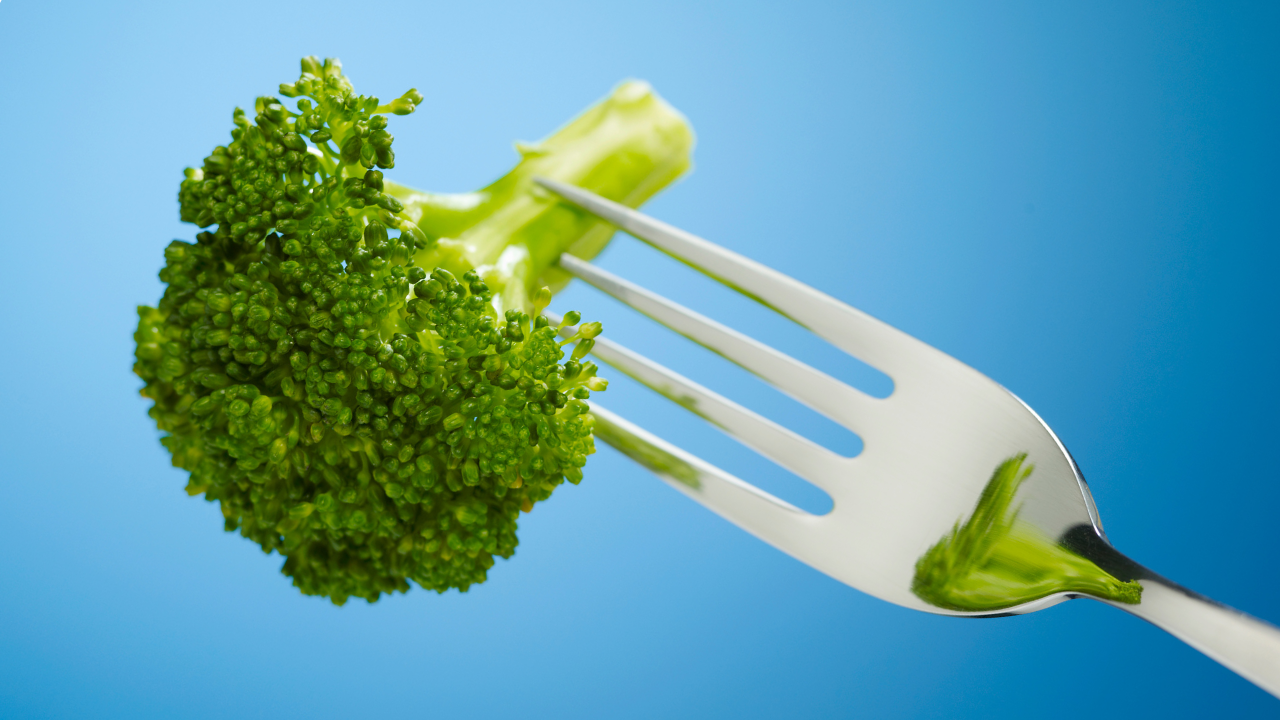
Broccoli takes its name from the Italian 'broccolo' — rooted in the Latin for arm or branch, which explains why it's sometimes translated as "little arms". And as you're about to see, there are very good reasons to welcome it onto your plate with open arms.
It belongs to the plant family you'll have seen described two ways in health writing — cruciferous or brassica — two names for the same group. Brassica is the genus, i.e., the broader biological grouping, shared by cabbage, kale, cauliflower, Brussels sprouts, arugula, and kohlrabi alike. Of all of them, broccoli is one of the most impressive in terms of it's nutritional profile.
The vitamins, the minerals, the incredible plant chemistry, and how it interacts with your body — makes broccoli stand apart from the rest of the family in a way that's genuinely worthy of appreciation.
Here's the brief...
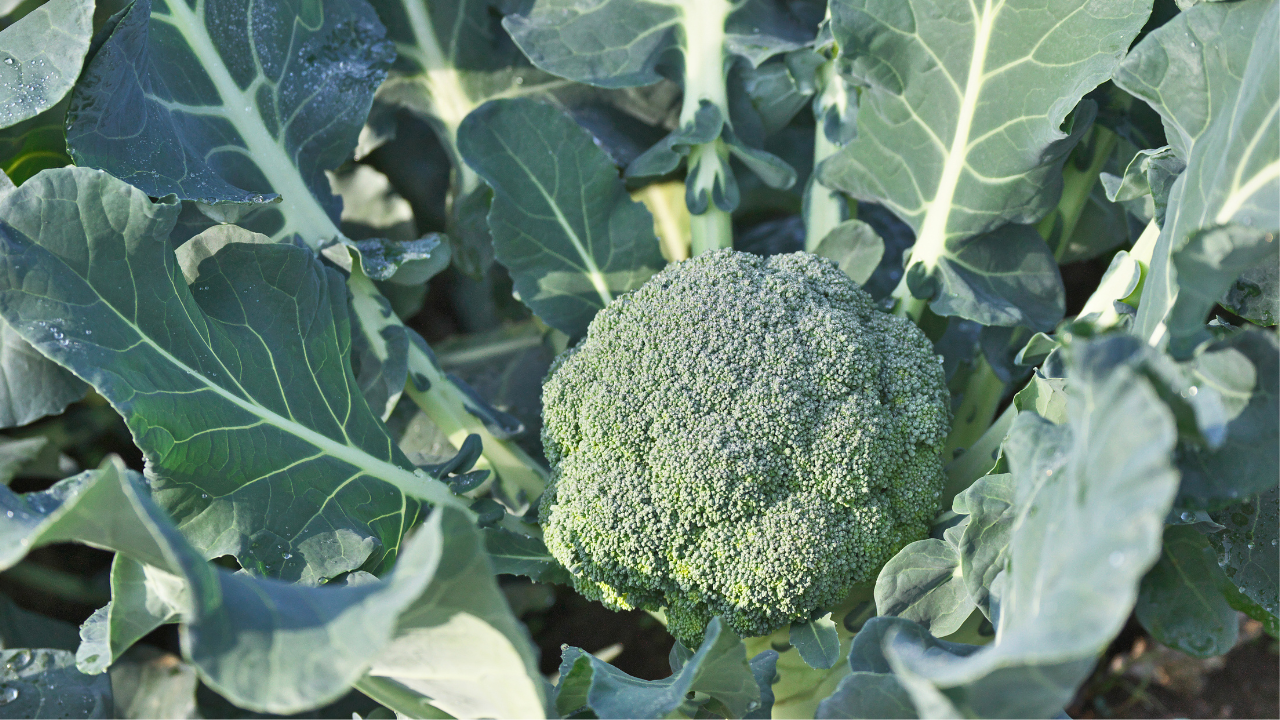
Foundational nutrients...
Before we even get to broccoli's seriously impressive plant chemistry, I want you to know, it punches well above its weight on basic, foundational nutrition:
- Vitamin C: More than an immune nutrient — vitamin C is a critical cofactor in collagen synthesis, iron absorption, and adrenal function. It's also one of the most heat-sensitive nutrients in broccoli, which is a good reason not to boil it into submission.[1]
- Vitamin K: Essential for proper blood clotting and bone metabolism. Vitamin K helps direct calcium into bones rather than arteries — a pairing that matters for both bone density and cardiovascular health over time.[2]
- Folate: Crucial for DNA synthesis, methylation, and cellular repair — well beyond its better-known role in pregnancy. Folate is a key player in the biochemical cycle that underlies mood regulation and detoxification. People with MTHFR gene variants absorb it less efficiently, making food sources particularly valuable.[3]
- Fiber: Broccoli's fiber feeds beneficial gut bacteria and slows glucose absorption — supporting both microbiome diversity and blood sugar regulation in one go. Two of the three pillars of the B.I.G.3 — Blood Sugar, Inflammation, Gut Health™ framework, right here in a single nutrient.[4]
- Lutein and Zeaxanthin: Two carotenoids that accumulate directly in the retina, protecting the eyes from UV and oxidative damage. Most people associate these with eggs or leafy greens — broccoli is a surprisingly strong source, and regular intake is associated with reduced risk of age-related macular degeneration and cataracts.[5]
- Kaempferol and Quercetin: Two flavonoid antioxidants working through entirely different pathways from the glucosinolate family. Kaempferol is associated with protection against cardiovascular disease, cancer, and allergic inflammation. Quercetin has been linked to lowering blood pressure in people with elevated levels.[6]
While all of that is impressive on its own, it's actually the plant chemistry that happens within the broccoli that takes it to the next level.
The plant chemistry that sets broccoli apart
Broccoli contains sulfur-based compounds called glucosinolates — that's why it smells slightly pungent when cooked and tastes faintly bitter when raw. These aren't flaws. They're signals of biological activity.
When broccoli is chewed, chopped, or digested, those glucosinolates break down into a set of smaller compounds that interact with your body in remarkable ways.[8]
-
Sulforaphane. You may have heard of it - it's the compound that has generated more research excitement than almost anything else in the plant world over the past three decades. What makes it unusual isn't just what it does, but also how it's made. And here's the crazy part: it doesn't actually exist inside an intact vegetable!
Instead, the plant stores two separate ingredients in different compartments of its cells — a precursor compound called glucoraphanin, and an enzyme called myrosinase.
The moment a cell wall is broken — by an insect chewing on a leaf, or a human chopping a floret on a cutting board — the two compounds mix, a chemical reaction fires and sulforaphane is created.
It's essentially the plant's defense mechanism. To a pest, it tastes sharp and bitter. For us, it's a biological goldmine.
Once inside the body, sulforaphane does something that sets it apart from almost every other plant compound. Rather than acting as a direct antioxidant...it activates a genetic switch inside your cells called Nrf2 (pronounced "nerf-two") — your body's internal defense commander.- When Nrf2 is switched on, it triggers the production of your own antioxidant and detoxification enzymes, in quantities far beyond what any single dietary compound could deliver alone.
- Sulforaphane is one of the most potent natural activators of Nrf2 known to science.[10]
- Studies link it to liver detoxification support, reduced chronic inflammation, improved blood sugar regulation, gut barrier integrity, and early-stage neuroprotection. [11]
- Indole-3-carbinol (I3C) and DIM The glucosinolates in broccoli also break down into a compound called indole-3-carbinol, or I3C — which converts further in the digestive system into DIM.
Together they play a meaningful role in how your body handles estrogen.- Here's what that actually means in plain terms: your body doesn't produce just one type of estrogen. It produces several, and some are more likely to drive cell growth than others. I3C and DIM help nudge your liver toward breaking estrogen down into its less stimulating forms — encouraging a cleaner, more balanced hormonal metabolism.
- This is thought to be one reason why people who eat more cruciferous vegetables consistently show lower rates of hormone-sensitive cancers, including certain types of breast and prostate cancer.[9]
- It's not a dramatic intervention. It's a quiet, ongoing influence — the kind that adds up over years of regular consumption.
I3C and DIM works quietly on hormonal balance, and sulforaphane activates your body's own internal defenses through one of the most ingenious mechanisms in the plant kingdom — this is a level of biological activity you simply don't find in most vegetables.
And all of it is sitting inside a floret that costs less than a cup of coffee!
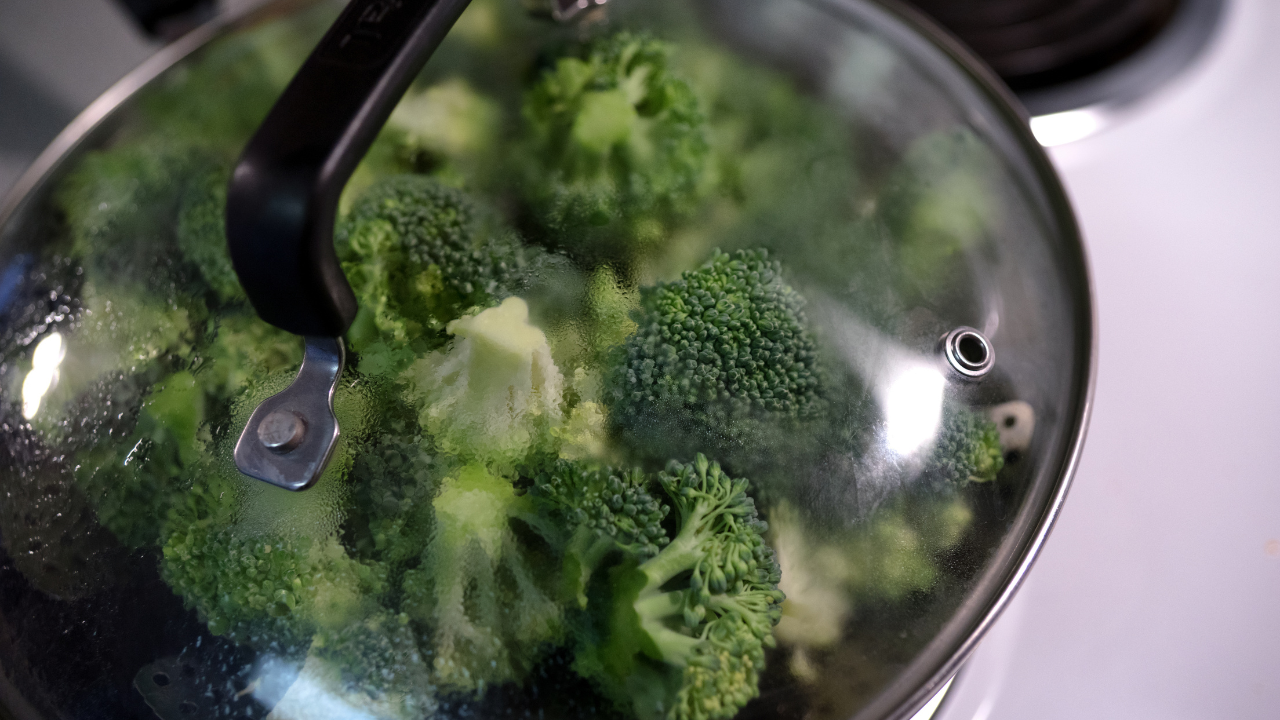
How you prepare it influences nutrient value
Most of us were taught to boil broccoli. It's worth knowing what the 'nutritional cost' of that approach— and what you can gain by preparing it differently.
Here's the preparation spectrum, from least to most nutritionally effective.
- Boiling — the most common, and most 'costly' approach
Boiling is where the most significant nutrient loss happens. Vitamin C and folate are both water-soluble and heat-sensitive — they leach directly into the cooking water and degrade with heat, meaning a meaningful portion is gone before the broccoli reaches your plate. The myrosinase enzyme needed to produce sulforaphane is also denatured by high heat, so the glucoraphanin and myrosinase never get to meet — and the conversion never completes. Boiling heavily compromises vitamin C, folate, and sulforaphane. If you do boil, keep it brief and use as little water as possible.[12] - Lightly steaming or stir-frying — significantly better
Keeping broccoli away from boiling water and limiting heat exposure makes a real difference. Light steaming (under five minutes) and brief stir-frying both preserve far more vitamin C and folate than boiling. Lutein and zeaxanthin are actually more bioavailable with light heat, as warmth softens the cell walls and makes the carotenoids easier to absorb. Sulforaphane conversion is still partially compromised by heat, but much less so than with boiling.[12]
- FYI - including mustard seeds can rescue the sulforaphane conversion as mustard seeds contain their own myrosinase enzyme which steps in to help do the job that the heat likely deactivated.
- Chop first, cook later — the best of all approaches
Here's a simple habit worth building: take your broccoli out of the refrigerator as soon as you start preparing dinner, chop or crush it, and let it sit on the cutting board while you prep everything else. That ~30 minute window allows the glucoraphanin and myrosinase to meet, react, and complete the sulforaphane conversion before any heat can interrupt it. Then lightly steam. This approach preserves vitamin C, folate, the carotenoids, and maximizes sulforaphane — the full nutritional picture, in one straightforward habit.[13]
My dad always jokes that he can tell when I've cooked — because when there's broccoli on the plate (which there often is!) its always got a little crunch to it. He's not wrong. And now you know why.
Broccoli sprouts deserve a mention of their own.
Gram for gram, they contain up to 100 times the concentration of glucoraphanin found in mature broccoli — making a small handful on a salad one of the most nutrient-dense additions to a meal you can make. They're relatively easy to grow at home in a jar, take about four days, and taste mildly peppery.[14]
The B.I.G.3 connection
Broccoli is one of those rare foods that works powerfully across all three pillars at once.
The fiber slows glucose absorption and feeds the microbiome.
Sulforaphane and kaempferol address chronic, low-grade inflammation through the aforementioned pathways.
The glucosinolate breakdown products support gut barrier integrity and positively influence microbiome composition. And the vitamin C, folate, and flavonoids layer antioxidant and cellular repair support on top of all of that.
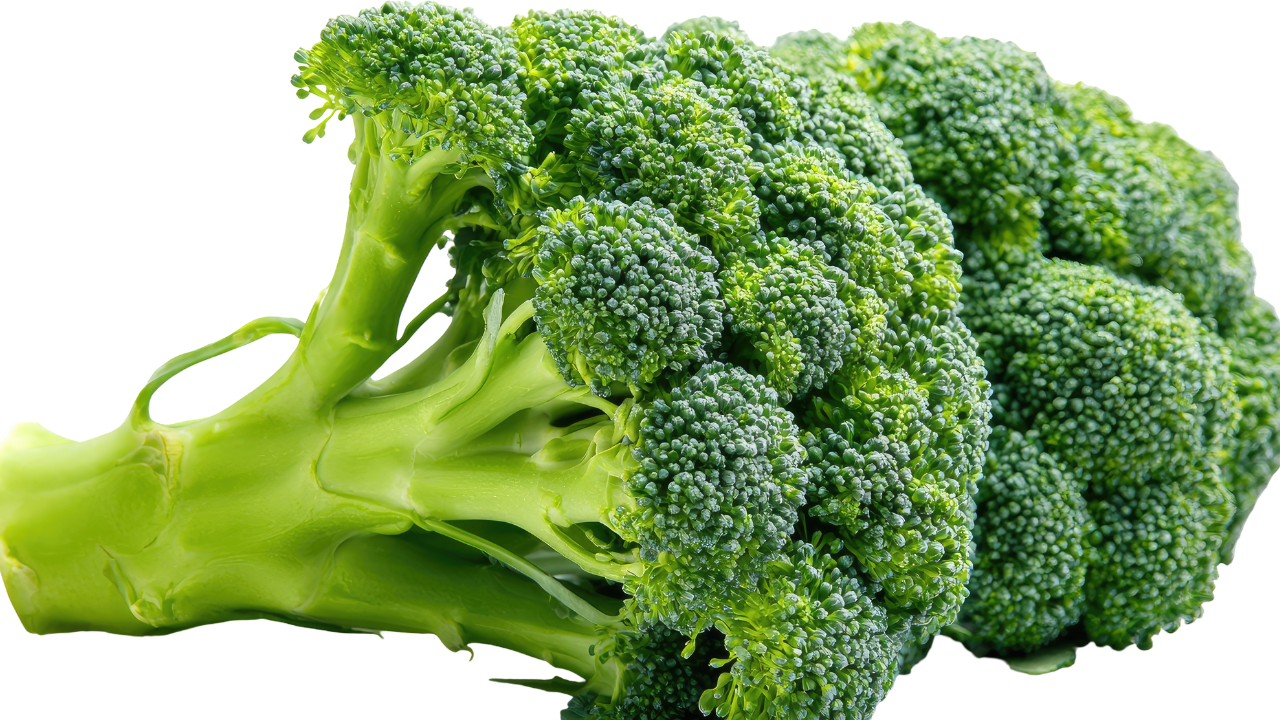
A note about supplements
Broccoli sprout and sulforaphane supplements have become increasingly popular — particularly those that contain both glucoraphanin and active myrosinase together, so the conversion can actually take place.
Products standardized for glucoraphanin alone, without the enzyme, are likely to have significantly lower bioavailability unless your gut microbiome can perform the conversion — which not everyone's can.[15]
Food first, as always.
Supplements as targeted support, not shortcuts.
In summary
Next time you see a head of broccoli at the grocery store — sitting quietly in a pile at around $2 a head — see it for what it actually is: a vitamin C powerhouse, a bone-health ally, a gut microbiome feeder, an eye protector, an estrogen metabolizer, an Nrf2 activator, and the standout performer of its entire plant family.
Some of the most powerful medicine doesn't come in a bottle. Sometimes it just needs to be chopped, rested, and lightly steamed.
TL;DR:
Little arms, big benefits: broccoli takes its name from the Italian broccolo, rooted in the Latin for arm or branch.
The nutrient profile alone is remarkable: Vitamin C, vitamin K, folate, fiber, lutein, zeaxanthin, and flavonoids — for a vegetable that costs around $2 a head.
I3C and DIM quietly support hormonal balance: By nudging the liver to break estrogen down into its less stimulating forms — a steady, cumulative influence that population studies consistently link to lower rates of hormone-sensitive cancers.
Sulforaphane is nature's defense mechanism — and our gain: It's only created when cell walls break and glucoraphanin meets myrosinase. The plant uses it to deter pests; we benefit from it enormously. It activates Nrf2 — your body's internal defense commander.
Preparation, and sequence, matters: Chop first, let it sit ~30 minutes, then lightly steam — giving glucoraphanin and myrosinase time to meet and react before heat can separate them again. If you've already cooked it, mustard seed powder can rescue the conversion.
References:
[1] Davey, M.W., et al. (2000). Plant L-ascorbic acid: chemistry, function, metabolism, bioavailability and effects of processing. Journal of the Science of Food and Agriculture.
[2] Geleijnse, J.M., et al. (2004). Dietary intake of menaquinone is associated with a reduced risk of coronary heart disease. Journal of Nutrition.
[3] Bailey, L.B. & Gregory, J.F. (1999). Folate metabolism and requirements. Journal of Nutrition.
[4] Dahl, W.J. & Stewart, M.L. (2015). Position of the Academy of Nutrition and Dietetics: Health implications of dietary fiber. Journal of the Academy of Nutrition and Dietetics.
[5] Seddon, J.M., et al. (1994). Dietary carotenoids, vitamins A, C, and E, and advanced age-related macular degeneration. JAMA.
[6] Formica, J.V. & Regelson, W. (1995). Review of the biology of quercetin and related bioflavonoids. Food and Chemical Toxicology.
[8] Fahey, J.W., et al. (1997). Broccoli sprouts: an exceptionally rich source of inducers of enzymes that protect against chemical carcinogens. PNAS.
[9] Bradlow, H.L., et al. (1991). Effects of dietary indole-3-carbinol on estrogen metabolism in mice and humans. Carcinogenesis.
[10] Kensler, T.W., et al. (2013). Keap1–Nrf2 signaling: A target for cancer prevention by sulforaphane. Topics in Current Chemistry.
[11] Axelsson, A.S., et al. (2017). Sulforaphane reduces hepatic glucose production and improves glucose control in patients with type 2 diabetes. Science Translational Medicine.
[12] Rungapamestry, V., et al. (2007). Effect of cooking brassica vegetables on the subsequent hydrolysis and metabolic fate of glucosinolates. Proceedings of the Nutrition Society.
[13] Matusheski, N.V. & Jeffery, E.H. (2001). Comparison of the bioactivity of two glucoraphanin hydrolysis products found in broccoli. Journal of Agricultural and Food Chemistry.
[14] Fahey, J.W., et al. (1997). Broccoli sprouts as an exceptionally rich source of inducers. PNAS.
[15] Fuentes, F., et al. (2015). Absorption and metabolism of sulforaphane and quercetin, and regulation of phase II enzymes, in human jejunum. Drug Metabolism and Disposition.
