
How to supercharge your soup

Why soup is such a great go-to when it's cold outside...
Cooler weather, crackling fires, thicker sweaters… it's officially soup season.
This is when comfort and deep nourishment meet in one pot. Soup can truly be a nutritional strategy, as well as a restorative ritual. It's a remarkably simple way to support your gut, immune system, and overall metabolic health during the coldest stretch of the year.
Below, I answer the questions I hear most—from “Why is soup so good for me?” to “Can I still have croutons?”—and offer a closer look at why broth may be one of the most restorative foods you can embrace right now.

Why is soup so nourishing?
Soup is a uniquely efficient way of warming up and delivering a wide range of nutrients—fiber, minerals, antioxidants, hydration, protein—without asking your digestive system to work very hard.
It’s warm, easy to break down, and packed with ingredients that support gut and immune health.
The slow simmering process enhances nutrient availability and improves digestibility, which is especially helpful when the seasons shift and our stress levels creep up.
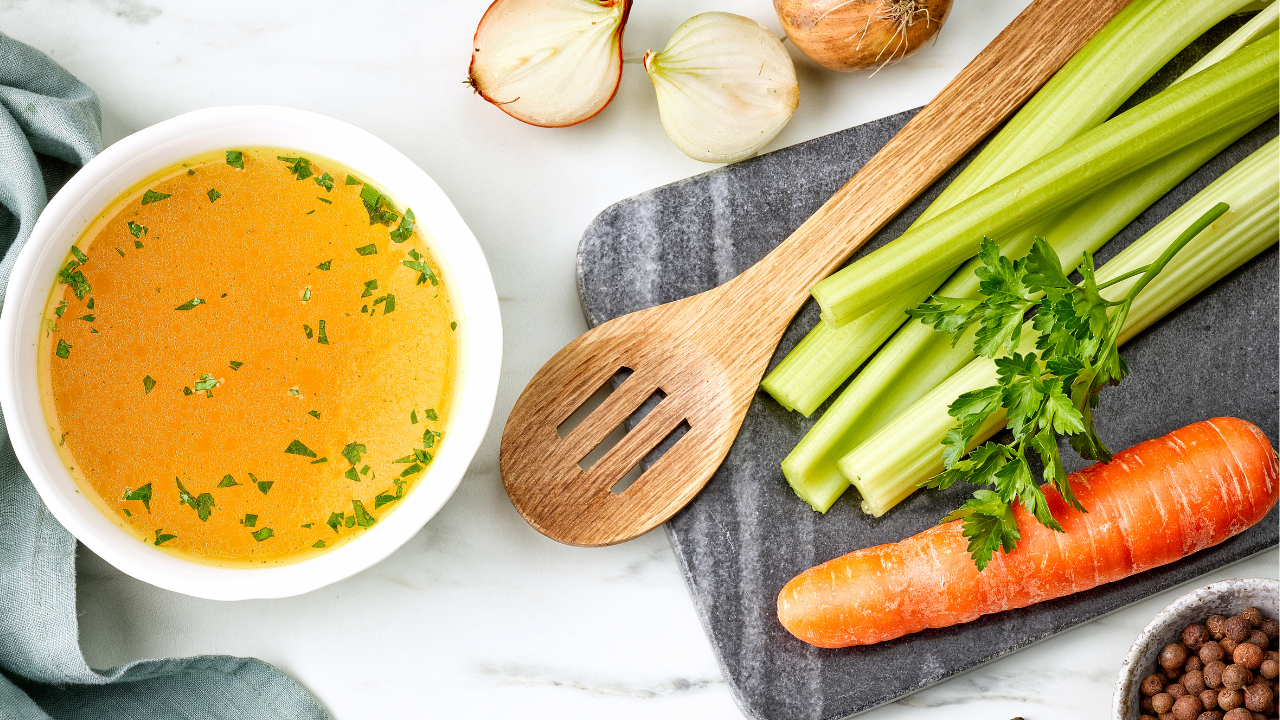
Why is broth such a powerful nutritional base?
A nutrient-rich broth transforms soup from a cozy meal into a therapeutic one.
Whether vegetable-based or bone-based, broth offers a concentrated dose of amino acids, electrolytes, and minerals that support gut integrity, immune function, hydration, and steady metabolic energy.
Here’s what makes broth so valuable:
- Amino acids that support gut and immune health. Broths provide glycine, proline, and L-glutamine, all of which help strengthen the intestinal lining, fuel intestinal cells, regulate inflammation, and support immune function. This is why broth is often considered foundational in gut repair protocols.
- Bioavailable minerals. Bone broth supplies calcium, magnesium, phosphorus, potassium, and trace minerals in a form that’s easy to absorb. These minerals support cardiovascular function, bone health, hydration, and cellular energy.
- Collagen- and gelatin-rich nourishment. The slow simmering of bones releases collagen and gelatin, offering support for connective tissue integrity, joint health, and improved digestion.
- Gentle, easily digested energy. Broth is hydrating and metabolically calming—ideal when appetite is off, digestion feels taxed, or you simply want something warming that won’t spike blood sugar.
- A foundation that elevates everything you add. Vegetables, legumes, herbs, spices, and proteins all become more digestible and more flavorful when cooked in a robust broth.
What is 'Magic Mineral Broth'—and why is it so revered?
Rebecca Katz, one of my favorite chefs (whose work inspired much of my own culinary training), coined the term Magic Mineral Broth - it became a staple in the functional nutrition world for good reason. It’s a mineral-rich, plant-forward broth which she originally created to support individuals going through cancer treatment.
It’s been widely credited for helping revive people whose appetites, energy, and digestion were severely compromised for all the reasons listed above.
Typical ingredients include:
Carrots, celery, onions, leeks, garlic, potatoes, kombu (a nourishing seaweed), peppercorns, parsley, bay leaves, and optional mushrooms.
Whether you use it as a sipping broth or the base for soups and legumes or grains, it’s one of the most supportive foods you can keep on hand.
Here's a link to my version of mineral broth. FYI - adding a sheet of kombu seaweed is as simple as that if you'd like to further boost the nutrient value.

How can I make soups more nutrient-dense?
- Start with a powerful broth. Use bone broth, or plant-based mineral broth as your base, ideally homemade but if that's not feasible rest assured there are great store-bought options (sold in the refrigerated section) in healthy grocery stores.
- Add a wide variety of vegetables. Onions, garlic, leeks, carrots, celery, mushrooms, leafy greens, squash, cauliflower—each adds antioxidants, fiber, and flavor.
- Increase plant-based protein content. If you want a higher-protein soup without relying solely on animal protein, try:
- Beans or lentils: white beans, chickpeas, red lentils, or French lentils blend seamlessly into broths and add fiber + amino acids.
- Soaked nuts or seeds: cashews, almonds, sunflower seeds, or hemp seeds can be blended into the soup to add creaminess and protein.
- Silken tofu: blends effortlessly into broth for an invisible protein boost.
- Make soups naturally creamy (without using actual cream). Try these functional, heart-healthy techniques, every option enhances texture while also improving nutrient density, protein content, and satiety:
- Blend in cooked cauliflower. Adds silky texture without altering flavor. Here's a link to my recipe for my favorite cauliflower soup.
- Add soaked cashews or almonds. They puree into rich, velvety cream.
- Use plant-based milks. Unsweetened cashew, almond, or hemp milk add body and creaminess.
- Puree part of the soup. Blend 1–2 cups of cooked soup and return to the pot for natural thickness.
- Add white beans. When blended, they create a luscious, protein-rich, creamy consistency. If you're not convinced, click this to try my favorite creamy mushroom soup recipe (pictured below) - it's delicious.
- Layer in herbs. Parsley, cilantro, dill, basil, or chives boost antioxidants and digestive support.
- Finish with healthy fats. A swirl of olive oil or a spoonful of pesto enhances nutrient absorption and fullness.

Can I still enjoy croutons with my soup?
Absolutely—croutons add more texture, and that irresistible crunch. But they’re best enjoyed intentionally.
Traditional croutons (refined carbs + fat + salt) can trigger a sharp rise in blood sugar—especially if eaten on an empty stomach. This is where food sequencing becomes your built-in metabolic advantage.
A quick reminder on food sequencing
If you’re going to enjoy any flour-based product—even something as small as croutons—have a few bites of protein first.
This simple step slows gastric emptying, helps steady blood sugar, and prevents the rapid glucose spike that’s common when carbohydrates are eaten first.
A couple of spoonfuls of soup with chicken, tofu, beans, or lentils is enough to set up a much steadier metabolic response.
A smarter crouton option
You can make delicious, blood-sugar-friendlier croutons in minutes using whole-grain or sourdough bread, olive oil, and herbs. They offer:
-
A gentler glucose response
-
Healthier fats
-
Better flavor
-
The same beloved crunch
Here’s my healthier crouton recipe you’ll want to bookmark.

TL;DR — Your soup season roadmap
Soups are one of the simplest, most comforting ways to support gut health, immune resilience, steady energy, and heart health throughout the colder months.
Here’s your quick-hit guide:
-
Broths—mineral, bone, or Magic Mineral Broth—are foundational.
They supply amino acids like L-glutamine, hydrating electrolytes, and bioavailable minerals that support gut integrity, immune balance, and metabolic stability. -
Magic Mineral Broth deserves its legendary status.
It’s deeply nourishing, easy to digest, remarkably restorative during times of stress or illness, and—thanks to Rebecca Katz’s “get your yum” philosophy—genuinely delicious. -
Make soups more sustaining by boosting protein.
Add beans, lentils, silken tofu, hemp hearts, or blended soaked nuts/seeds. These elevate both satiety and nutrient density. -
Make them creamy without heavy cream.
Blend in cauliflower, white beans, plant-based milks, or soaked cashews/almonds for a luscious, heart-healthy texture. -
Croutons are absolutely still welcome.
Just sequence wisely (protein first), choose whole-grain or sourdough versions, and make them at home for a smarter crunch. -
Above all, soup season is nourishment made simple.
One pot, minimal effort, maximum impact on your digestion, inflammation, energy, and heart health.
